Gardening Services Notting Hill: Recycling and Sustainability
 Gardening Services Notting Hill is committed to creating an eco-friendly waste disposal area and a sustainable rubbish gardening area throughout Notting Hill and surrounding west London neighbourhoods. Our approach balances practical site clearance, seasonal green waste collection and a circular reuse mindset that suits small front gardens and large communal courtyards alike. We focus on minimising landfill, maximising recycling and reusing materials locally whenever possible.
We set a clear recycling percentage target for every job: a baseline of 75% recycling and recovery for green and inert garden waste, rising to 85% where on-site segregation and local reuse channels allow. That target reflects realistic, data-driven ambitions for an eco-conscious gardening waste management service operating in urban boroughs, and helps drive decisions on sorting, transport and partner selection.
 Our teams work in alignment with borough waste separation policies — for example, the Royal Borough of Kensington and Chelsea's emphasis on separate food, garden and mixed recycling streams — so clients benefit from a system that dovetails with local kerbside practice. We provide clear on-site segregation of wood, green waste, soil and recyclable packaging so materials can flow into the correct local transfer stations and borough-managed facilities for onward processing.
Sustainable rubbish gardening area practices we use
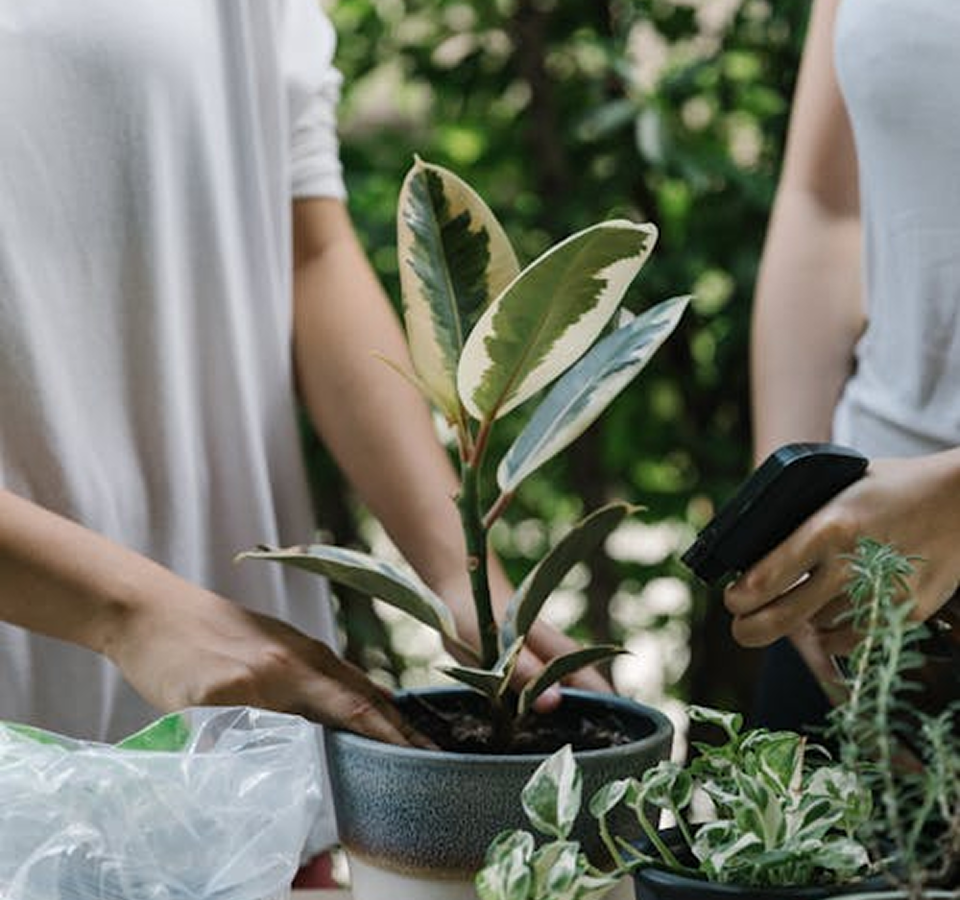
Every project follows a simple hierarchy: reduce, reuse, recycle, and recover. We design an eco garden waste management plan that prioritises on-site reuse (mulch and compost), donation of usable plants and pots, and careful sorting for recycling. When materials leave site they go to authorised local transfer stations or borough transfer facilities to ensure legal and low-carbon processing.
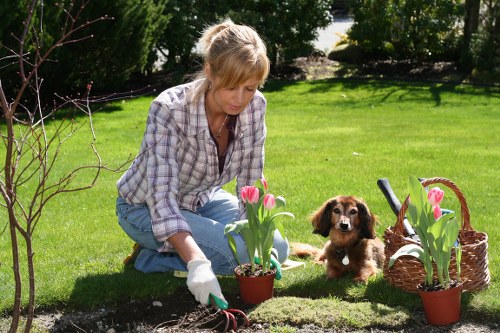 We also build partnerships with charities, social enterprises and community gardens to redirect usable items — such as compost, clean soil, plant stock, tools and garden furniture — back into the local community. These partnerships reduce waste tonnage, extend product life cycles and help create green spaces across the borough. Typical charity partners include community allotments and local reuse organisations that accept cleaned, serviceable garden goods.
To make this tangible we run practical recycling activity that mirrors the boroughs' approach: separate bins for green waste, designated containers for woody material and branches, and isolation areas for contaminated soil. Our crews label and log materials, producing a simple waste report so clients can see recycling outcomes against the target percentage.
Logistics, low-carbon vans and local transfer stations
We route collections to the nearest authorised transfer stations and borough depots to cut mileage and emissions. Where borough-run transfer centres operate separate streams for wood, green waste and inert materials we route accordingly, improving final recycling rates. Using local transfer stations reduces turnaround time and supports the local circular economy.
Our fleet includes low-carbon vans and smaller electric-assist vehicles for tight Notting Hill streets, reducing the carbon footprint of each job. Vehicles are maintained to a high standard to avoid idling and unnecessary trips, and we plan multi-stop routes to concentrate collections and make efficient use of low-emission vehicles.
We are constantly updating our logistics to reflect where boroughs accept certain materials for composting or thermal recovery so we can achieve the highest possible diversion from landfill while complying with local regulations and best practice.
Our sustainable rubbish gardening area services also include material-specific recycling streams to increase value recovery:
- Green waste: mulching and municipal composting facilities
- Woody debris: chipping for biomass or reuse in communal landscaping
- Soil and aggregates: screening, cleaning and reuse where contamination is not present
- Reusable items: pots, planters and raised beds donated to charities
 We monitor job-level recycling percentages and set improvement plans for repeat clients and estates. For large clearances we aim to exceed our baseline target through extra sorting, temporary on-site stockpiles for reuse, and liaison with borough recycling coordinators.
 In summary, our Notting Hill gardening services deliver an integrated, practical and locally aware program for an eco-friendly waste disposal area and a resilient sustainable rubbish gardening area. By combining clear on-site separation, partnerships with charities and community projects, reliable use of local transfer stations and a low-carbon vehicle fleet, we turn garden clearance into a circular, community-minded service that reduces waste, supports local reuse and keeps West London greener.